
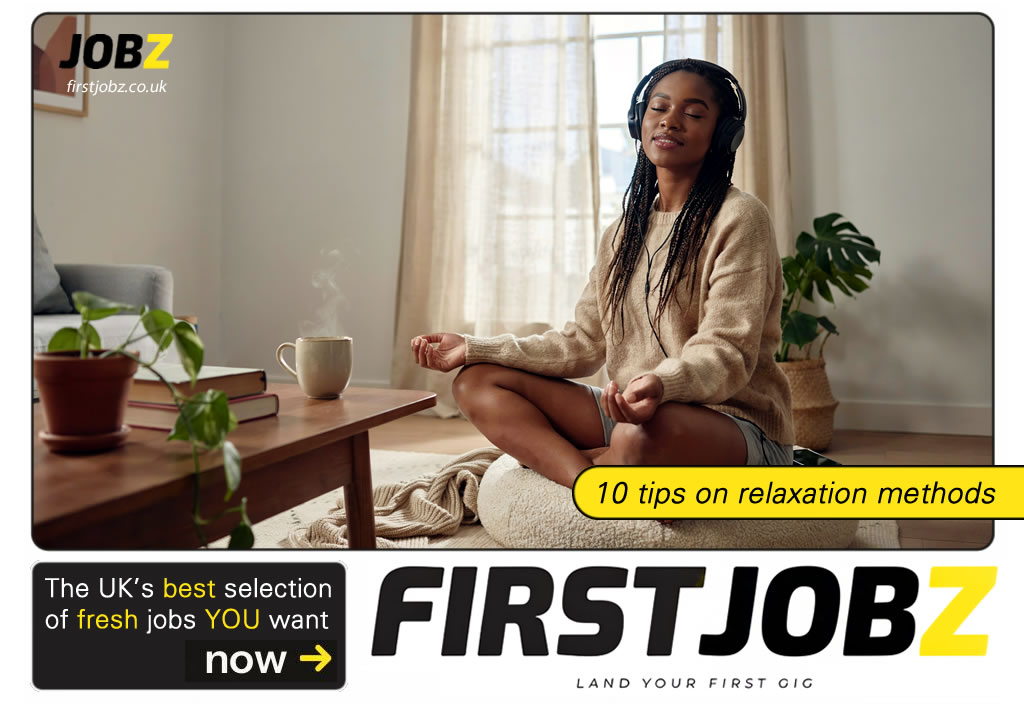
10 tips on relaxation
Interview nerves are proof you care, not proof something's wrong.
Everyone gets them - the confident-looking candidates, the managers interviewing you, the person who ends up getting the job. The difference isn't who feels nervous. It's who has a plan for it. The candidates who look calm aren't wired differently to you. They've just done a few things beforehand that you're about to learn.
Because here's the thing: you don't need zero nerves. A bit of adrenaline sharpens you. What you need is nerves at a useful volume rather than a deafening one. That's a skill you can practise like any other, so here are 10 ways to build it: 5 for the days before and 5 for the day itself, when the volume really climbs.
1. Preparation is the original relaxation technique
Most interview anxiety is really uncertainty wearing a scary mask. You don't know what they'll ask, so your brain fills the gap with worst cases. Preparation shrinks that gap. Every question you've practised, every fact you've learned about the company, every story you've got ready is one less unknown for your imagination to feed on.
We covered exactly what to prepare in our interview guide, so this one won't repeat it. The point here is simpler: prep isn't just about better answers. It's the single most reliable calming tool there is, because confidence built on work doesn't wobble the way confidence built on hope does.
Ten solid minutes of prep buys more calm than any breathing trick ever invented.
2. Rename the feeling
Racing heart, fluttery stomach, extra energy: that's not only fear. It's the same physical recipe as excitement. Your body genuinely struggles to tell the difference between "about to do something scary" and "about to do something big", which means you get a say in the label.
So stop ordering yourself to calm down, because it rarely works. Try telling yourself "I'm ready" or even "I'm excited" instead. It sounds daft the first time. It also happens to work, because you're no longer fighting the energy, you're steering it. Same fuel, better destination.
One honest note while we're here: if nerves regularly grow into something bigger that gets in the way of everyday life, talking to your GP or someone you trust is a strength move, not a weakness.
3. Shrink the stakes
Your brain will try to tell you this interview decides your entire future. It doesn't. It's one conversation, with one employer, about one job, in a country full of employers and jobs. If it goes well, brilliant. If it doesn't, you've had a free training session and you'll be sharper at the next one.
Remember the person across the table wants this to go well too. Interviewing is a chore for them and a good candidate is the best part of their day. You're not walking into a trap. You're walking into a room where someone is hoping you're the answer.
Try the worst-case audit: write down what actually happens if you don't get it. Usually the honest answer is "I apply for more jobs", which is exactly what you were doing anyway. Seeing that in writing takes a surprising amount of power away from the fear. Imagined stakes make shaky hands. Real stakes are almost always lower than they feel.
4. Protect your sleep
Tired brains are anxious brains. Everything feels bigger, questions land harder and words go missing exactly when you need them. So treat sleep as interview prep, starting two nights out rather than just the night before, because one rough pre-interview night matters far less when the tank behind it is full. Think of it as banking calm in advance.
Keep the last evening boring on purpose. No cramming past a set time, screens down earlier than usual, caffeine cut off by mid-afternoon. Lay out your outfit so the morning runs itself - our interview clothes guide has the whole routine. Then trust the work you've already done.
5. Rehearse it going fine
Athletes walk through the race in their heads before they run it and you can do the same. Spend five quiet minutes picturing the interview going fine. Not perfect: fine. Arriving early. The hello. Sitting down, answering the opener, hitting a tricky question, pausing, handling it anyway. Walking out with your shoulders down.
The brain treats vivid rehearsal as a kind of experience, so by the time you're in the real room part of you has already been there. It also beats what most people do instead, which is vividly rehearsing disaster on a loop.
That's the groundwork laid. Now for the day itself - the morning, the journey, the waiting room chair - when nerves stop whispering and start shouting.
6. Move before you sit still
Adrenaline is fuel and fuel wants burning. Sitting perfectly still all morning lets it pool into jitters, so give your body something to do with it. A brisk twenty-minute walk, a few flights of stairs, a kick about in the garden: anything that gets your heart working for a bit and lets it settle back down again.
Build movement into the journey too. Get off the bus a stop early and walk the last stretch. It burns nerves, guarantees you're not sitting there stewing and delivers you to the door feeling like you've already done something today. Just pace it so you arrive composed rather than sweating.
Twenty minutes of movement will do more for your nerves than an hour of sitting still telling yourself to relax.
7. Watch the caffeine, eat something
Caffeine and adrenaline are teammates you don't want doubling up. Your usual single coffee is fine. A second or third on an empty nervous stomach is how you end up shaky-handed in reception, which reads as panic even when it's just espresso. Energy drinks before an interview are the worst offenders of all. Save the celebration can for afterwards.
And do eat, even if nerves say no. An empty stomach amplifies every wobble, then growls through your answers for good measure. Keep it plain and familiar: toast, a banana, porridge, whatever sits easily. Boring food, steady blood sugar, steadier you. This is honestly one of the easiest wins on the whole list.
8. Set a cramming cut-off
There's a point where more prep stops helping and starts winding you up. New information in the final hour won't stick anyway; it just crowds the stuff that will. So set a hard stop. After that: notes closed, no frantic googling of the company, no doom-scrolling either, because your feed is nobody's idea of a calming influence. If your hands need a job, tidy your bag or wipe your shoes. Small tasks calm better than small screens.
Fill the gap with something that steadies you instead. A playlist for the journey works brilliantly - familiar songs, nothing too frantic. Or ring someone who makes you laugh. The last hour's job isn't learning. It's arriving at the door as yourself, not as a revision machine with a heartbeat.
9. Breathe longer out than in
When the wait gets loud, your breath is the one control dial you always have. The trick is simple: make the exhale longer than the inhale. In through the nose for a count of four, out slowly through the mouth for six or so. A long exhale is the body's own off-switch signal, so a minute of it genuinely turns the volume down. We gave the sixty-second door version in our interview guide; this is the fuller kit, worth practising at home so it's familiar when it counts.
If your head is still racing, add grounding: quietly name five things you can see, four you can hear, three you can touch. It sounds like nothing. It works because your attention can't be in the waiting room and in worst-case-land at the same time. Do it as many times as you need. Nobody in that waiting room can tell and half of them are probably doing something similar.
10. Plan the after, then let it go
Give the day a shape beyond the interview. Book something small for afterwards: a coffee with a mate, your favourite lunch, an episode of whatever you're watching. It turns the interview into an event in your day rather than the whole day, which quietly shrinks it. Knowing something nice sits on the other side also gives your brain somewhere to land that isn't an instant replay.
Then, when it's done, actually let it go. One minute of honest review - what went well, one thing to sharpen - then close the tab. No hour-by-hour post-mortem, no re-living the answer you'd redo. You did the thing most people dread doing. That deserves the win, whatever the outcome email says.
Calm isn't a personality type. It's a set of small habits: prepare properly, sleep on purpose, move, breathe, keep the stakes honest. None of them cost anything and every one is learnable this week. Nerves will still turn up, because they always do when something matters. Let them. They're just energy waiting for instructions - and now you know how to give them.
Download this guide as a PDF ↓- Results day 2026: your options, whichever way it goes →
- The parents' guide to results day: how to be exactly what they need →
- GCSE results day 2026: your options, whichever way it goes →
- The parents' guide to GCSE results day: what to say and when →
- Want to know our 10 tips for landing your first job? →
- Want to know our 10 tips for fantastic interviews? →
- Want to know our 10 tips on interview clothes? →